
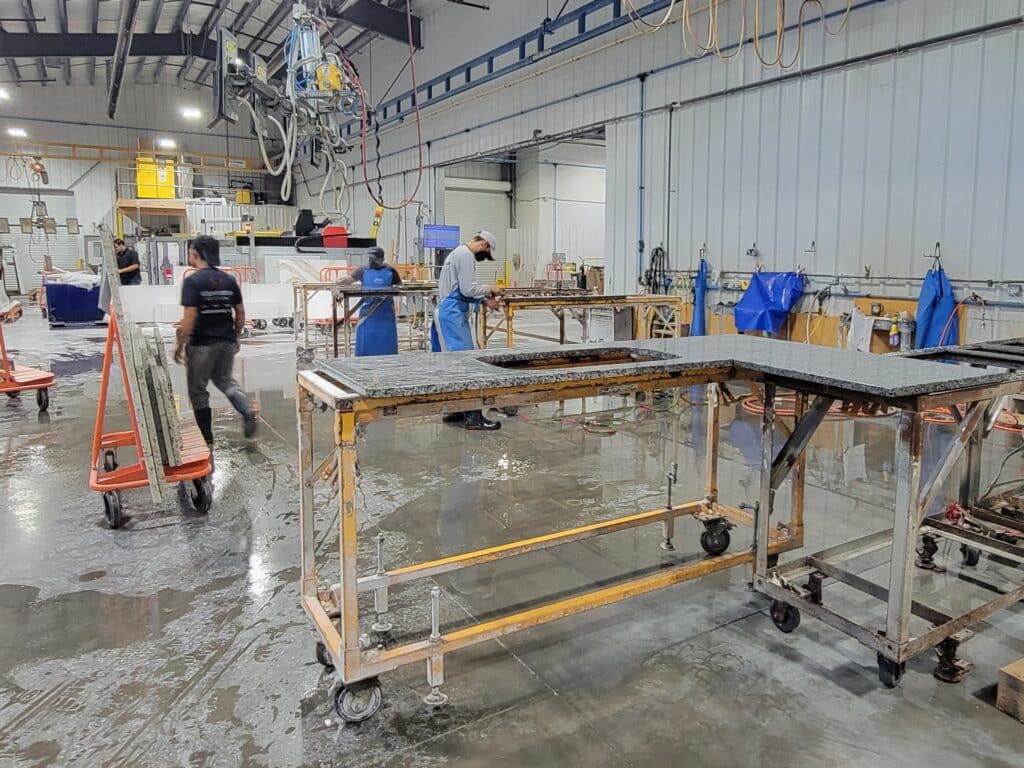
In the world of stone fabrication, a “quiet” shop is usually a nightmare. When your CNC saw or waterjet goes dark unexpectedly, it’s not just a mechanical failure—it’s a bottleneck that ripples through your entire schedule, pushing back installs and eating into your margins.
Most shops operate on reactive maintenance (fixing things when they break). But the most profitable shops rely on Preventative Maintenance (PM). Here is how to build a PM plan that keeps the spindles spinning and the stone moving.
1. The High Cost of “Wait and See”
If you only service your machines when they scream for help, you’re paying a premium. Reactive maintenance costs 3 to 5 times more than preventative maintenance due to:
- Expedited Shipping: Paying top dollar for overnight parts.
- Overtime Labor: Paying techs for emergency weekend repairs.
- Lost Opportunity: The slabs you didn’t cut while the machine was down.
2. The Daily “Pre-Flight” Checklist
The best defense starts with the person closest to the machine. Your operators should spend the first 10–15 minutes of every shift on a “Pre-Flight” check.
- Clean the Rails: Stone dust is abrasive. If it sits on the ways or rails, it acts like sandpaper.
- Check Lubrication Levels: Ensure auto-lubers are full and manual points are greased.
- Inspect Tooling: Check for worn diamond segments or dull bits that put unnecessary strain on the motor.
- Air & Water Pressure: Fluctuations here are often the first sign of a failing compressor or pump.
3. Create a Tiered Maintenance Schedule
A “one-size-fits-all” approach doesn’t work. Your PM plan should be broken down into cycles based on machine hours or calendar days.
Frequency | Task Focus | Target Components |
Daily | Clean & Clear | Bellows, rails, and water recycled systems. |
Weekly | Inspect & Adjust | Belt tension, filter cleaning, and sensor alignment. |
Monthly | Deep Dive | Gearbox oil checks, electrical cabinet dust removal, and battery backups. |
Annual | Professional Audit | Precision leveling, laser alignment, and full system calibration. |
4. Leverage the Data (IoT and Smart Sensors)
Modern stone machinery is smarter than ever. Many CNCs now feature built-in hour meters and service alerts.
Pro Tip: Don’t ignore the “Service Required” light like a “Check Engine” light in a car. Treat it as a scheduled pit stop. Tracking these metrics allows you to predict failure before it happens—a concept known as Predictive Maintenance.
5. Standardize Your Spare Parts Kit
Downtime is often extended because a $50 sensor is stuck in a warehouse three states away. Every shop should have a “Critical Spares” kit on-site, including:
- Common fuses and relays.
- Suction cup seals and gaskets.
- Spindle coolant or specialized lubricants.
- Extra filters for pumps and cabinets.
The Bottom Line: Discipline Over Repair
A Preventative Maintenance plan only works if it’s non-negotiable. It requires a culture shift where “taking the machine offline for an hour today” is seen as a victory, not a delay. By preventing problems before they happen, you aren’t just fixing machines—you’re protecting your reputation for on-time delivery.