
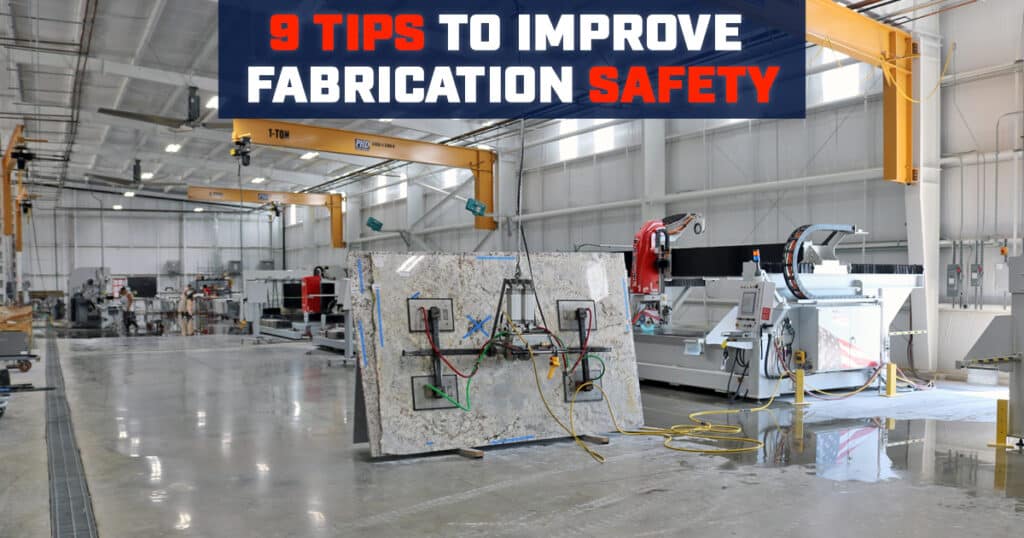
In the stone fabrication industry, the “shop floor” is where the magic happens—but it’s also where the risks are highest. From silica dust to heavy slabs, the hazards are real. However, safety doesn’t have to be a chore or a stack of paperwork that sits in the office.
Effective safety is about building a culture where the right gear and the right habits are second nature. Here is a breakdown of the PPE and shop practices that keep your crew healthy and your production line moving.
1. The Respirator: Your Most Important Tool
Silicosis is a permanent, life-altering disease, but it is 100% preventable. When it comes to respiratory protection, “good enough” isn’t enough.
- Go Beyond the “Dust Mask”: N95 masks are a baseline, but for high-exposure tasks, Half-Mask Respirators with P100 filters offer a better seal and superior protection.
- The Fit Test: A respirator only works if it fits. Ensure every team member undergoes a professional fit test to prevent “leaks” around the cheeks or nose.
- Cleanliness Matters: Store respirators in sealed bags when not in use. A respirator caked in shop dust on the inside is doing more harm than good.
2. Guarding the Senses: Eyes and Ears
Stone fabrication is loud and messy. The damage to hearing and vision often happens incrementally, so consistency is key.
- Wraparound Eye Protection: Standard glasses leave gaps. Use ANSI Z87.1 rated wraparound glasses or goggles to keep flying stone chips and slurry out of your eyes.
- Double Up on Decibels: If you’re running bridge saws or CNC machines all day, consider “double plugging”—using earplugs underneath earmuffs—to significantly reduce fatigue and long-term hearing loss.
3. Smart Shop Practices (Beyond the Gear)
PPE is your last line of defense; your shop’s environment should be the first.
- Wet Cutting is Non-Negotiable: If you’re cutting dry, you’re asking for trouble. Integrated water-feed systems are the gold standard for keeping silica particles out of the air and trapped in the slurry.
- The “Clean as You Go” Rule: Slurry that dries becomes airborne dust. Use squeegees and wet vacs throughout the shift rather than waiting for a “big clean” at the end of the week.
- Slab Handling Safety: Never move a slab alone if you can help it. Use certified vacuum lifters or A-frame carts, and never stand on the “fall side” of a slab, even if it’s secured.
PPE Checklist for the Modern Fabricator
Hazard | Required PPE | Recommended Practice |
Silica Dust | P100 Respirator | Use wet-cutting methods exclusively. |
Stone Chips | Z87+ Safety Glasses | Use face shields for heavy grinding. |
Heavy Slabs | Steel-Toe Boots | Use mechanical lifters; check slings for wear. |
Sharp Edges | Cut-Resistant Gloves | Remove gloves when near rotating spindles. |
High Noise | Earplugs/Earmuffs | Annual hearing tests for long-term staff. |
The Bottom Line
Safety isn’t about slowing down; it’s about staying in the game. When your team knows they are protected, morale goes up, and turnover goes down. At Stone Fabricator Solutions, we believe that the best shops aren’t just the ones with the fastest machines—they’re the ones where every worker goes home as healthy as they arrived.
Is your shop currently transitioning to a 100% wet-cutting environment, or are you looking for better ways to manage your slurry?